
Restaurant Lighting Design: Balancing Ambience and Functionality
You’ve planned spectacular interiors with the perfect finishes and architectural details. But if lighting isn’t a priority, then your restaurant might be too dim, spoiling its appeal, or too bright for diners to be comfortable. We’ve put together this handy guide to create a beautiful atmosphere and put your restaurant in the best light.
Assess the Restaurant's Layout and Purpose
Plan by Zone
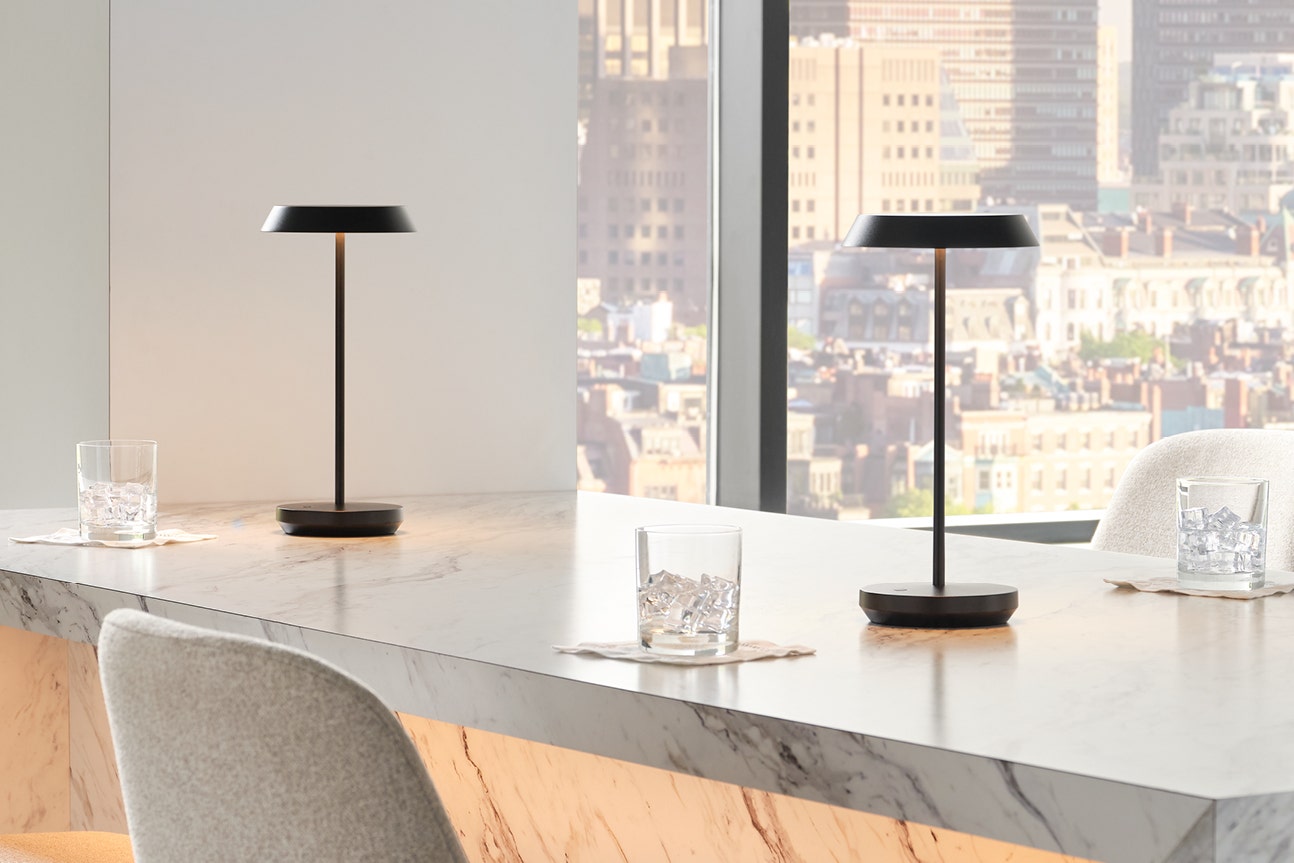
As you get started, think through the different zones of your restaurant. There’s not only the dining area, but also the entry, kitchen, restrooms or even a bar. Each one of these should have an appropriate level of brightness: warm and welcoming in the entry, bright in the kitchen, well-lit without being overwhelming in the bathrooms, and dimmer in the bar. We’ll get into how to achieve these effects in each zone in a moment.
Use Natural Light
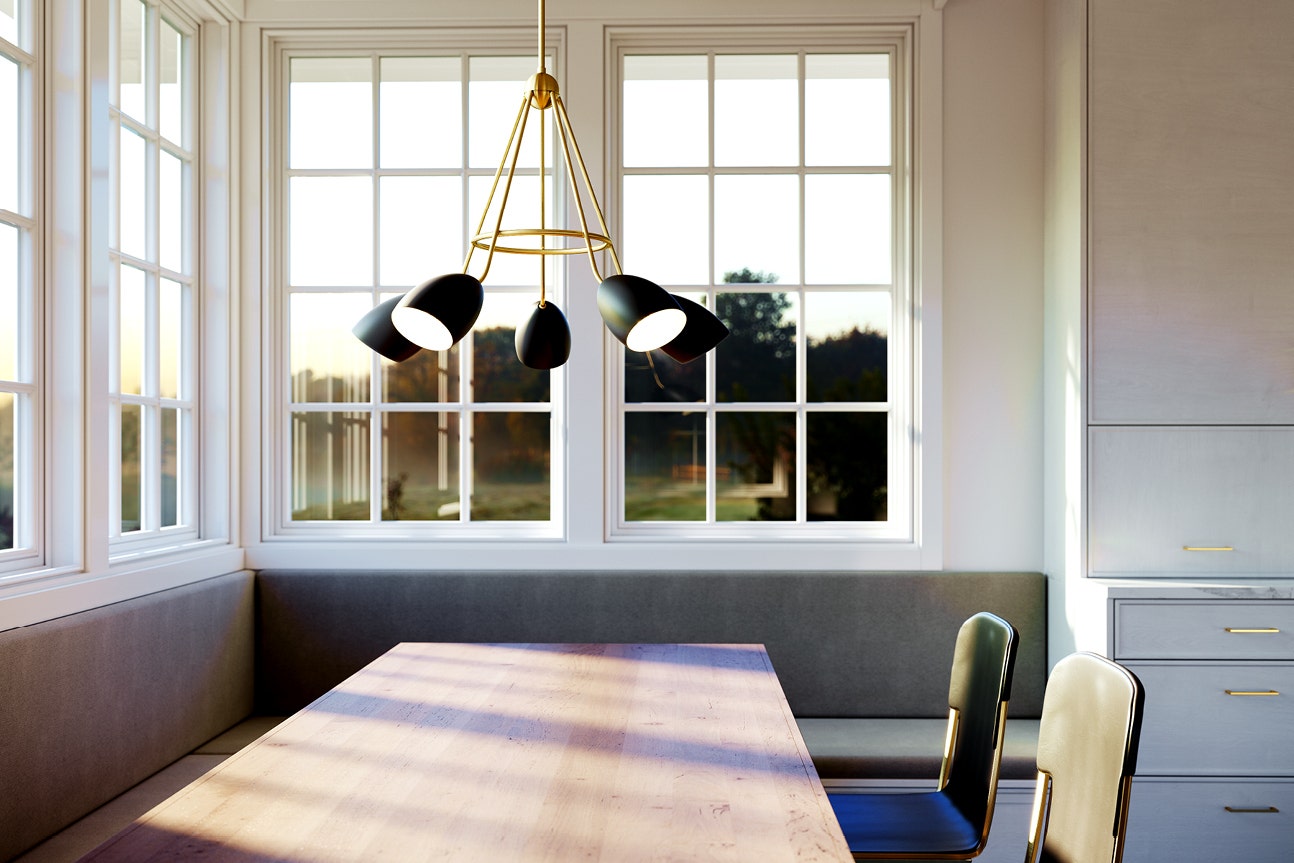
Next, consider the amount of natural light coming in through the windows. Maximizing daylight will not only cut down on electricity bills, but also will make your restaurant feel more open and spacious. Daylight is even shown to improve people’s moods — a complementary part of your goal in offering a pleasant dining experience. You can use mirrors, glossy surfaces, and other reflective materials to enhance the daylight by bouncing it around your space. Of course, some restaurants may prefer a darker, more moody interior, so plan according to what suits your brand.
Control Glare
While daylight is a welcome guest in your restaurant, you don’t want a bright glare from outside interfering with your diners’ enjoyment. Use shades and blinds to manage and direct natural light, with window treatments that can be adjusted based on the time of day.
Choose the Right Lighting Fixtures for Restaurants
When planning lighting for your restaurant, be aware that there are four types of lighting. Ambient lighting is the base layer of general light in your space, and it can vary from zone to zone (as discussed above). Task lighting brings focused brightness to areas where tasks are being performed, whether it’s in the kitchen or at a host stand. Accent lighting is used to call attention to architectural details, works of art or other objects. And decorative lighting is all about the fixtures, finding ones that enhance the design appeal of the space.
Ambient Lighting for Restaurants
Once you’ve determined the desired ambiance for each zone — be it lively, intimate, moody, or functional — you’ll want to find fixtures that create the right overall lighting for that zone. As a general rule, dim light encourages diners to stay and relax, while brighter light is good for prompting a quick turnaround of customers in high-traffic restaurants.
If you’re looking for soft, diffused lighting, such as in the dining area or a bar, consider a chandelier. While your restaurant may call for an elegant and ornate chandelier, you can also opt for one that is more industrial and understated in design, in keeping with a modern décor.
Recessed lighting can also work, especially in a very modern space. These are cut into the ceiling in a grid pattern to evenly illuminate the space. Because these require expert installation, it’s wise to consult a lighting professional, who can also help you make sure that the grid is set up in a way so that there are no dark corners.
Task Lighting for Restaurants
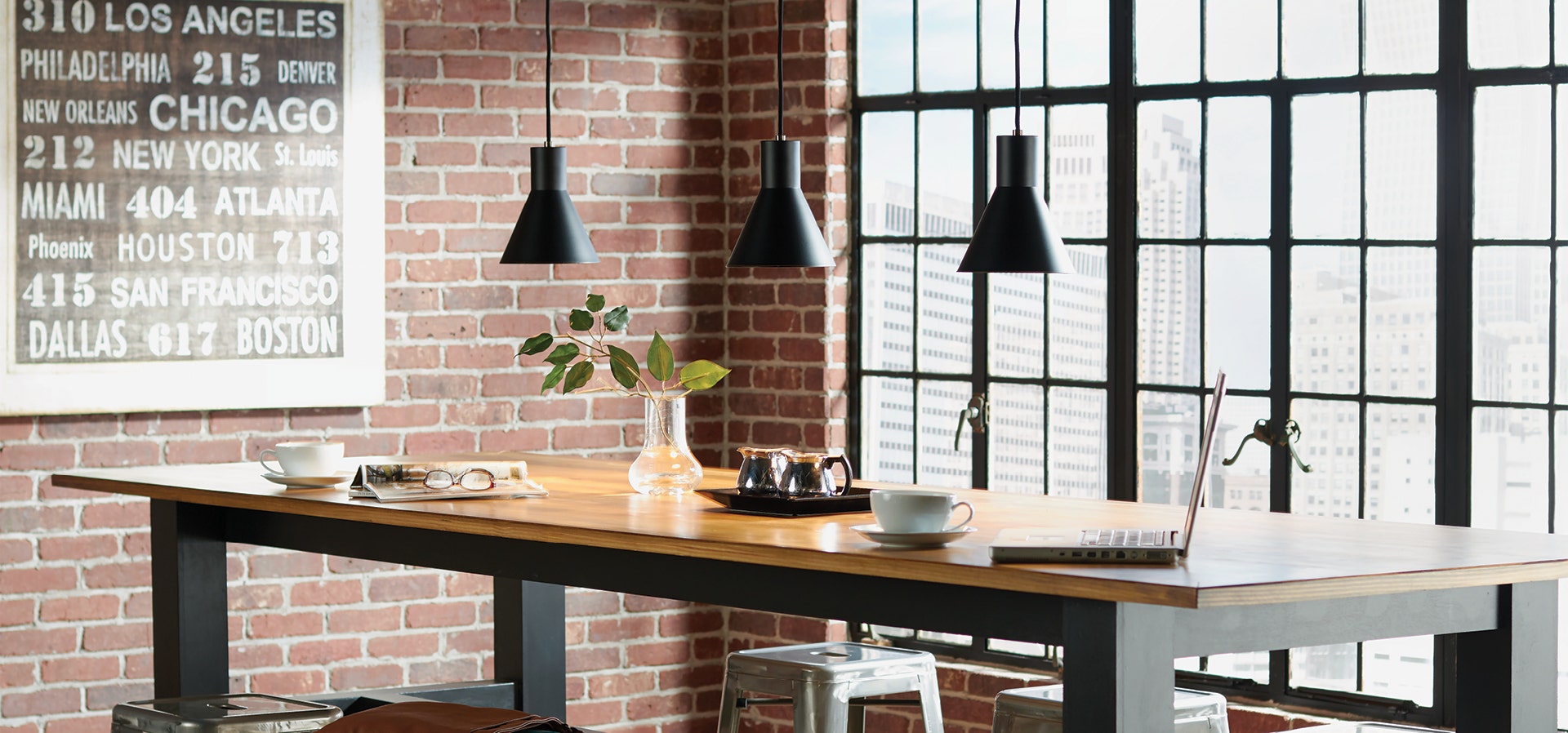
If a chandelier seems like it may be out of place in your space, then pendant lights are a wonderful option. They are easy to install, and adjustable to shine light whenever you want it. They also come in a wide range of styles, and can be hung over the tables in the dining zone, over a bar, or even in the kitchen to provide bright light where it’s needed, whether it’s to read a menu or chop up a garnish.
Track lights and under-cabinet lighting are perfect fits for the kitchen, since they don’t take up much space and will shine focused light on countertops and cooking areas. And at the host stand, a picture light will provide enough brightness to check a reservation without sacrificing ambiance.
Accent Lighting for Restaurants
Accent lighting adds visual appeal and is more decorative than functional in terms of providing illumination. In your front-of-house area, it can create a focal point or highlight architectural and design features.
Install spotlights on walls or ceilings then angle them to shine brightly on archways, sculptures and paintings. Choosing wall sconces that complement your aesthetic will provide a touch of elegance when installed above dining booths.
Decorative Lighting for Restaurants
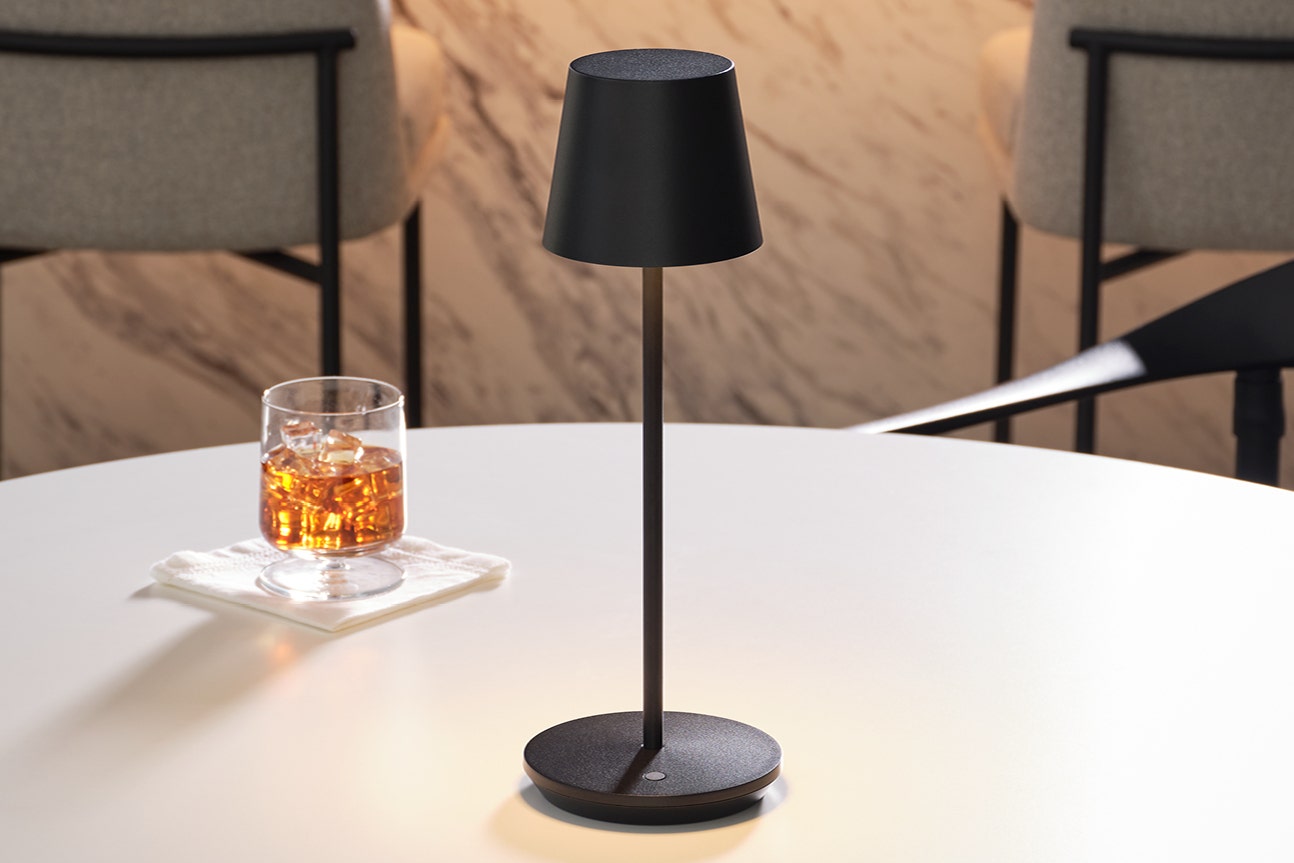
Purely decorative lighting can come in the form of overhead lights or lamps that themselves become design features in your restaurant, adding to the ambiance. In this light (pun intended), a glamorous chandelier or eclectic pendant can elevate the space, while understated industrial fixtures will underscore a modern and upscale aesthetic. Table lamps with fun finishes, warm and shiny metals and funky geometric shapes are also on trend for restaurants.
Understand the Role of Lighting in Each Zone
| Dining Areas | Create a warm and inviting atmosphere with soft glows and dimmed lighting |
| Bar | Highlight the bar area and create a social vibe with pendant lights and sconces |
| Kitchen | Ensure bright, focused lighting for safety and efficiency with track lights and under-cabinet lighting |
| Restrooms | Provide functional yet comfortable lighting with recessed ceiling fixtures and mirror lights |
| Entryways | Make a strong first impression with chandeliers and wall sconces |
| Outdoor Areas | Create an inviting and cozy atmosphere with stunning outdoor lanterns or string lights |
Select Appropriate Bulbs and Color Temperatures
No matter whether it be for ambient, task, accent, or decorative lighting, every light has a bulb, and every bulb comes with a specific color temperature. Bulbs that have 2,000-3,000 Kelvins generate light that is “warm white,” ranging from subtly orange to yellowish white. Bulbs between 3,100 and 4,500 Kelvins are called “cool white” or “bright white,” casting a neutral white light with a slightly bluish tint. Kelvin levels greater than 4,500 are close to daylight.
Some bulbs even come with an adjustable color temperature, which can be dialed up during the day, and down for evening dining and special occasions. These bulbs range from very warm to very cool, allowing you to change the atmosphere in your restaurant without changing the décor.
| Warm White (2,000K – 3,000K) | For a cozy and inviting atmosphere in dining areas |
| Cool White (4,000K – 5,000K) | For a clean and efficient look in kitchens and restrooms |
| Adjustable Color Temperature | For flexible lighting that can be adjusted for different times of day and special events |
Plan the Lighting Layout
Overall, you want your lighting layout to provide an even and layered distribution of brightness, avoiding dark spots as well as overly bright areas through a balanced placement of fixtures. It’s smart to do so with one eye on the time of day when light will be needed.
In the morning hours, brighter light is better. As your customers are starting their day, bright lights will help energize them and provide stimulation. During lunch, lighting typically stays bright, encouraging quicker turnarounds since most customers are only stopping in for a quick meal before heading back to work. The last thing they want is to feel drowsy with a long afternoon ahead. But when evening arrives, it’s time to dim the lights. Even if your restaurant is casual, a warmer and softer light will help promote relaxation, encouraging guests to stay longer and order something extra from the drink or dessert menu.
Test and Adjust the Lighting
Before your restaurant’s opening day, test the lighting during different times of the day for a real-time assessment of its effectiveness, and so you can course-correct before customers are ordering and enjoying themselves. Get feedback from your staff, especially kitchen and front-of-house employees, to gather insights and opinions. Next, adjust as needed, fine-tuning the placement and brightness of lights and making iterative improvements to get things just right.
Maintain and Update the Lighting Scheme
On a regularly scheduled basis, be sure to check and replace bulbs, as well as fixtures that might get damaged or broken. Also, think in terms of seasonal maintenance, adjusting lighting for holidays and festive events. Most of these changes can be managed easily, but for more extensive repairs or changes, it’s a good idea to get in touch with a lighting professional.
Light Your Restaurant Beautifully
Whatever type of restaurant you are launching, here at Visual Comfort we can help you find fixtures that will make both guests and employees comfortable in your space. Visit visualcomfort.com to start exploring.
FAQ
What types of lighting fixtures are ideal for restaurants?
A layered mix of ambient, task, accent and decorative lighting is the right strategy. Smart general lighting sets the tone for guests and helps them see clearly, task lighting enables employees to do their jobs well, and accent and decorative lights add to the ambience.
Can lighting actually improve guest engagement and sales?
The lighting in your restaurant is a key part of articulating its brand and setting the mood for diners. The use of fixtures that coordinate with the rest of the design, as well as the color temperature of bulbs, can help create the atmosphere that you want to achieve.