Dark Sky Lighting
The effects of air, land, and water pollution are well known, but the fallout from light pollution garners significantly less attention. And it’s not simply that ever-increasing light pollution impairs our ability to see the star-studded night sky. There are other real and measurable consequences for humans, wildlife, and the environment. For humans, light pollution alters our circadian rhythms and melatonin production, which can lead to various health concerns. In the animal kingdom, the night light disrupts vital eating, nesting, and migratory patterns, creating harmful ripple effects, impacting both climate and the environment.
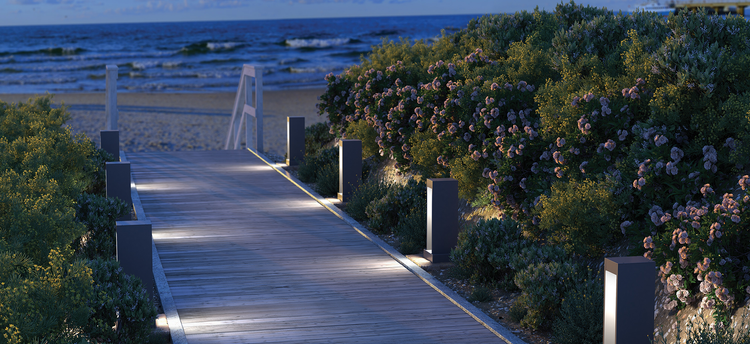
Each elegant outdoor light fixture is designed with a shield that directs light downward, fulfilling one of the key tenets of dark sky-friendly lighting.
Tips from Dark Sky Experts
- Be judicious with your lighting and only illuminate areas that truly need it.
- Swap conventional bulbs for more energy efficient LED options.
- Make your lights only as bright as you need them to be—no more.
- Mount smart. Exterior lights should be hung no more than eight feet from the floor and should not be used above the first habitable floor of a home, especially in beachside homes.